How to Stand Out in a Job Interview in 2026: The Complete Guide
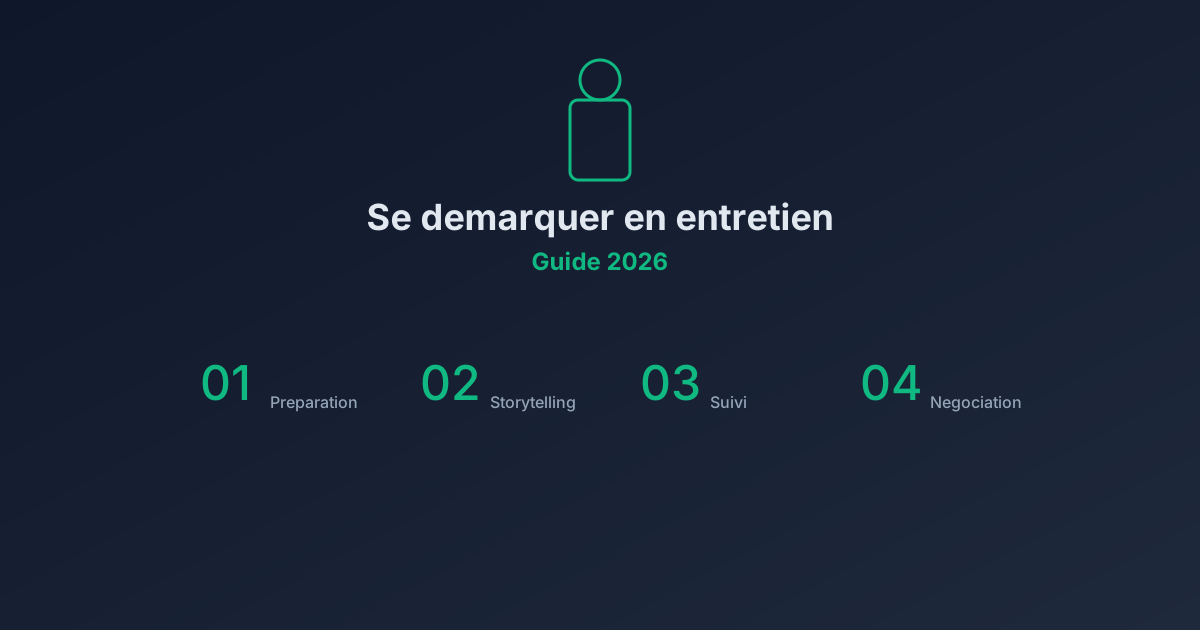
In 2026, the interview process has evolved considerably. Artificial intelligence pre-screens applications, video interviews have become the norm for first rounds, and recruiters now evaluate behavioural skills as much as technical ones. This guide gives you the tools to stand out at every stage.
Before the Interview: Strategic Preparation
Research the Company Thoroughly
Recruiters immediately detect a candidate who hasn't done their homework. Before each interview:
- Review the company's website, blog, and social media channels
- Read recent press releases and media articles
- Identify current industry challenges and how the company positions itself
- Research your interviewer on LinkedIn to understand their background
Prepare Your Stories Using the STAR Method
Behavioural questions ("Tell me about a time when...") are everywhere in 2026. The STAR method helps you structure compelling answers:
- Situation: Briefly describe the context
- Task: Explain your role and responsibility
- Action: Detail the specific actions you took
- Result: Quantify the impact of your actions
Prepare 6 to 8 STAR stories covering different competencies: leadership, problem-solving, teamwork, conflict management, innovation, and resilience.
Anticipate Common Questions
Certain questions come up consistently in Quebec interviews:
- "Why do you want to leave your current position?"
- "What are your salary expectations?" (See our tech salary guide to position yourself)
- "Where do you see yourself in 5 years?"
- "What is your greatest weakness?"
- "Why should we choose you?"
During the Interview: Techniques That Make the Difference
The First 90 Seconds Matter
Studies show recruiters form a first impression within the first 90 seconds. Pay attention to:
- Punctuality: Arrive 5 to 10 minutes early (no more)
- Handshake: Firm but not crushing
- Introduction: A clear, engaging 30-second pitch
- Body language: Eye contact, natural smile, open posture
Storytelling Over Listing
Instead of listing your skills, tell concrete stories. "I reduced deployment time by 40% by implementing a CI/CD pipeline" is infinitely more memorable than "I know DevOps."
Ask Smart Questions
The questions you ask say as much about you as your answers. Focus on:
- "What are the biggest challenges the team is currently facing?"
- "How do you measure success in this role after 6 months?"
- "What do you enjoy most about working here?"
Avoid asking about vacation, hours, or benefits during the first interview.
Video Interviews: Specific Rules
In 2026, over 70% of first interviews are conducted by video. Essential rules:
- Test your technology before the interview: camera, microphone, connection, lighting
- Choose a neutral, professional background
- Look at the camera, not the screen, to simulate eye contact
- Avoid distractions: notifications, pets, background noise
- Dress completely in professional attire
Technical Interviews in Tech
If you're applying in technology, technical interviews are unavoidable. Here's how to prepare:
Live Coding Tests
Practice on platforms like LeetCode, HackerRank, or CodeSignal. Recruiters evaluate your thought process as much as the final result. Think out loud.
Technical Case Studies
For senior positions, expect system design questions. Prepare architectures for common systems: API, message queue, distributed database.
Culture and Values Assessment
More and more companies add a "culture fit" interview. Be authentic: a poor cultural alignment is as harmful for you as for the employer.
After the Interview: Strategic Follow-Up
The Thank-You Email
Send a thank-you email within 24 hours of the interview. This email should:
- Thank the interviewer for their time
- Reference a specific point from the conversation
- Reaffirm your interest in the position
- Be brief (5-7 lines maximum)
Following Up Without Pestering
If you haven't heard back after the stated timeline, one follow-up email is enough. Wait at least one week past the expected deadline. Stay professional and positive.
Red Flags to Watch For
The interview is also your opportunity to evaluate the employer. Be cautious if:
- The process is disorganized or interviewers seem unprepared
- Questions focus mainly on your availability for overtime
- The employer speaks negatively about former employees
- The offered salary is significantly below market rate
- Nobody can clearly explain your responsibilities
Negotiating Your Offer
Once you receive an offer, take time to negotiate. In Quebec, average salary increases planned for 2026 are 3.2% (source: Ordre des CRHA). If the offer is below market, present concrete data to justify your counter-proposal. Our salary negotiation guide provides detailed scripts and strategies.
At VALO, we prepare our candidates for interviews and advise them on market salary expectations. Browse our tech job openings and benefit from personalized guidance.
For complete preparation, Steppia helps you simulate job interviews, optimize your resume, and prepare for the most common questions in your field.
Read also: Resume and interview tips to land a job in Quebec | Quebec tech salary guide | How to write a tech resume in Canada
Besoin d'aide pour recruter ?
Nos experts tech vous accompagnent pour trouver les profils qui correspondent à vos besoins.
Discuter avec un expertOptimisez votre CV avec Steppia
La plateforme reference pour maximiser vos chances sur le marche canadien. Test ATS, preparation entretien et recommandations IA.
Tester mon CV